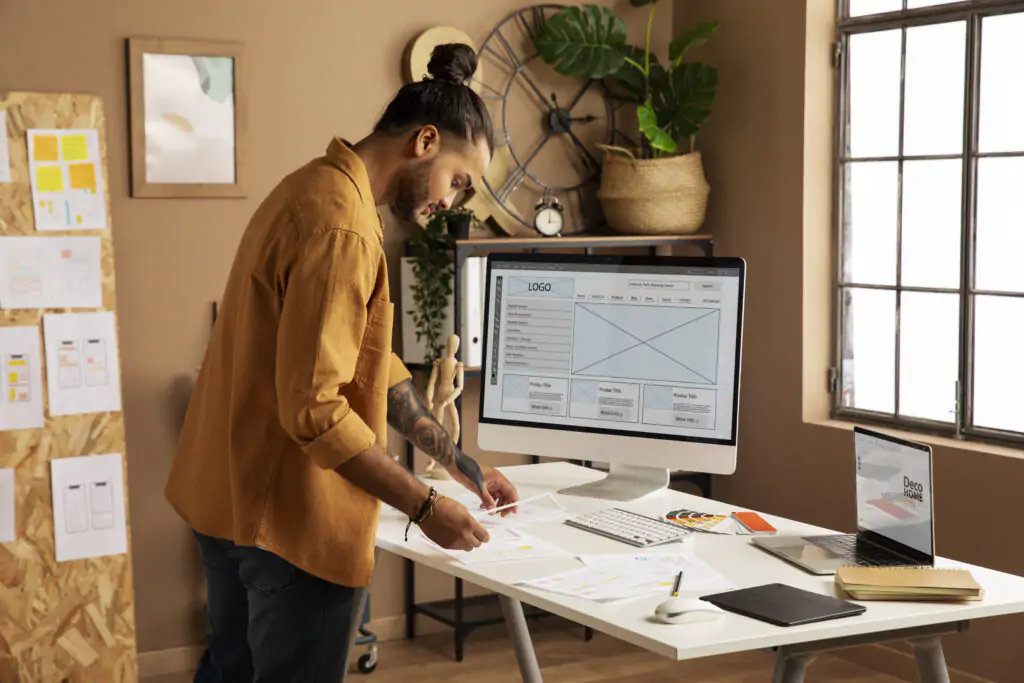
Choosing a website designer in Guwahati is one of the more important decisions a local business makes. Your website is your shop window, your sales rep, and your first impression, all open 24 hours a day. Whether you run a clinic in Dispur, a coaching institute in Ganeshguri, a tea brand, a homestay, a boutique in Paltan Bazaar,r or a startup in Beltola, the person who builds your site will shape how customers find you and whether they trust you.
The best way to judge a designer before signing a contract is their portfolio. But most people only glance at it and ask, “Does it look nice?” That is not enough. A beautiful screenshot can hide a slow, broken, en or invisible website.
This guide explains exactly what to look for in a website designer’s portfolio, what to test yourself in five minutes, and which red flags should make you walk away.
When reviewing a web designer’s portfolio in Guwahati, check these things first:
If a designer’s portfolio passes most of these checks, you are likely dealing with a professional. If it fails several, keep looking.
Start by asking whether the designer has built websites for businesses like yours. A site for a restaurant has different needs from a site for a hospital, an e-commerce store, or a travel company.
Look for projects that match your needs in three ways:
You do not need a designer who has built exactly your type of site, but you do want evidence that they understand your customers. If you run a tour company in Assam, a portfolio full of tourism, hospitality, or booking-focused sites is a much stronger signal than a portfolio of unrelated templates.
A portfolio made of polished images proves only that the designer can use design software. It does not prove the site works.
For every project listed, ask for the live link and open it. Then check the following:
If most of the portfolio sites are offline, redirected, ed or broken, that is a serious warning sign. Some clients do close their businesses, so one or two dead links are understandable. A pattern of them is not.
Also check whether the designer credits themselves in the footer. Many professionals do. Be careful if a portfolio site carries someone else’s credit, as that may mean the work was copied or outsourced.
Mobile is not an extra. For most small businesses in India, it is the main way customers will reach you. Someone searching for a dentist, a bakery, or a coaching class in Guwahati will most likely do it on a phone while moving around the city.
Open each portfolio site on your own phone and check:
A good designer thinks “mobile first”, meaning the phone version is planned carefully rather than being a squeezed copy of the desktop page. If the portfolio only looks good on a laptop, the designer is behind the times.
Slow websites lose visitors and rankings. Google measures real-world user experience through Core Web Vitals, which focus on loading, responsiveness, and visual stability. The widely used targets are:
You can test any portfolio site for free using Google PageSpeed Insights. Paste the URL, run the test,t and look at the mobile score. You are not expecting perfection on every site, since some clients insist on heavy sliders and large videos. But you should see that the designer pays attention to image compression, clean code, de and sensible hosting.
Internet speeds across Assam and the wider Northeast can vary, so a lightweight website matters even more here. A site that loads quickly on a weak mobile connection will keep visitors who would otherwise leave.
A website that nobody can find is just an expensive brochure. A good web designer in Guwahati should build with search engines in mind from day one, even if they are not a full-time SEO agency.
You can check the basics without any special tools:
Ask the designer directly: “What SEO work do you include in a standard build?” A strong answer mentions metadata, site structure, speed, schema markup, sitemap submission,n and mobile optimisation. A weak answer is “We will do SEO later” or “SEO is not part of design.”
Visual taste is subjective, but professional design quality is easier to spot than you might think. Look for:
That last point matters. If ten clients in ten industries all have near-identical layouts, you may simply be getting a reskinned theme. Templates are not wrong, and they can be a smart budget choice, but you should know whether you are paying for custom work or a template with your logo on it.
A website exists to produce results: enquiries, bookings, calls, purchases or sign-ups. Look at how portfolio sites guide visitors toward action.
Good conversion-focused design usually includes:
A portfolio that is full of decoration but has no clear next step for the visitor is a sign the designer thinks in terms of art rather than business. You want both.
The strongest portfolios do not just show what a website looks like. They explain what it achieved.
A solid case study answers four questions:
Results might include more enquiries, higher online orders, better search visibility, faster page speed, or lower bounce rates. Be realistic. Not every designer tracks sales for clients, and results depend on many factors beyond design. But a professional should at least be able to talk about outcomes, not only visuals.
Also verify testimonials. Real ones usually include a name, a business, and ideally a link or photo. Better still, ask for two or three past clients you can call directly. A confident designer will happily provide references. Calling a previous client in Guwahati for five minutes can tell you more than any sales pitch about reliability, communication,n and whether deadlines were met.
The portfolio may look great, but you also need to know what is underneath it and who controls it.
Ask and check the following:
One of the most common disputes between small businesses and freelancers is ownership. If the designer holds your domain or hosting and the relationship breaks down, you could lose your website. Put ownership terms in writing before work starts.
A local designer should offer something an overseas freelancer or a generic template marketplace cannot: understanding of your market.
Check whether their portfolio shows awareness of things like:
A designer who knows the local market is also easier to meet in person, which can make approvals, training,g and troubleshooting smoother. That said, being local is a bonus and not a substitute for quality. Judge skills first and location second.
A website is not a one-time purchase. Plugins need updates, security threats appear, and content needs refreshing. Look for signs that the designer thinks beyond launch day.
Questions to ask:
Portfolio sites that are several years old and still running smoothly suggest the designer builds things that last. Sites that show security warnings, outdated copyright years, or broken plugins suggest the opposite.
Even an impressive-looking portfolio can hide problems. Be cautious if you notice any of the following:
Trust your instincts. If communication is confusing or evasive before you hire them, it rarely gets better afterwards.
Use this quick scorecard to compare two or three designers side by side. Give each item a score from 1 (poor) to 5 (excellent).
| Criteria | What to check | Score (1–5) |
|---|---|---|
| Relevance | Similar industry or site type | |
| Live sites | Working links, current content | |
| Mobile design | Easy to use on a phone | |
| Speed | PageSpeed Insights mobile result | |
| SEO basics | Titles, headings, indexing, HTTPS | |
| Design quality | Hierarchy, branding, variety | |
| Conversion | Clear calls-to-action, trust signals | |
| Case studies | Problem, solution, and outcome | |
| References | Past clients willing to talk | |
| Ownership | Domain, hosting, and files in your name | |
| Support | Maintenance, warranty, response time | |
| Local insight | Language, payments, market knowledge |
A total above 48 out of 60 is a strong sign. Below 36 suggests you should keep searching.
After reviewing the portfolio, use the conversation to confirm what you have seen:
Ask for an itemised quotation. Prices for a website design company in Guwahati vary widely depending on scope, custom design, e-commerce features,s and ongoing services, so comparing like with like is essential. The cheapest quote is not always the lowest total cost once fixes, missing features, es and renewals are added.
Look for live websites, strong mobile design, fast loading, clean SEO structure, relevant industry experience, clear case studies, real testimonials, and consistent quality across projects. A good portfolio shows results, not just attractive visuals.
Start with recommendations from local business owners, then review portfolios, test their live sites, speak to past clients,s and compare written quotes. Check that they offer clear contracts, support, rt and transparent ownership of your domain and hosting.
Costs depend on the number of pages, custom design, features such as online payments or booking, content creation, ion and ongoing maintenance. Ask for an itemised quote from at least three designers so you can compare scope and not just price.
A simple business website can often be completed in a few weeks, while larger sites with e-commerce, custom features, or heavy content may take longer. Delays are usually caused by late content and slow feedback, so prepare your text and images early.
Freelancers can offer lower prices and direct communication, while agencies usually provide a team with design, development,t and SEO skills and better continuity. The right choice depends on your budget, project size, and how much ongoing support you need.
A local designer can understand your market, language,s and customers, and is easier to meet in person. However, skill, communication, and reliability matter more than location, so evaluate the portfolio and references first.
Yes, at least the fundamentals. Proper structure, metadata, mobile optimisation, speed, ed and clean code give your site a foundation for ranking. Ongoing SEO, such as content and link building, may be a separate service.
You should. Register the domain in your name or your company’s name and keep the login details. This protects you if you change designers later.
A polished sales pitch is easy. A strong, working, fast, and well-built portfolio is much harder to fake. When you are choosing a website designer in Guwahati, treat the portfolio as evidence: open the live sites, test them on your phone, check their speed, look for real results, and speak to past clients.
The right designer will welcome these checks, because confident professionals have nothing to hide. Take your time, compare at least three candidates using the scorecard above, get everything in writing, and choose the one who combines good design, technical skill, honest communication,n and genuine understanding of your business.
Do that, and your website will not just look good. It will bring you customers.
Which Payment Gateway Is Best for E-Commerce in Assam? The best payment gateway for e-commerce…
App for Small Business in Guwahati: Android, iOS or Both? If you run a shop,…
Website Designer in Guwahati Cost: 2026 Price Guide If you run a business in Assam…
Website Design in Guwahati: The Complete Buyer's Guide (What's Possible, What It Costs, and Your…
Predictive Maintenance for Rotating Equipment Predictive maintenance for rotating equipment is a strategy that uses…
When it comes to the best website design companies in Guwahati, choosing the right one…